
Evidence-Based Activism: Why Facts Are Your Most Powerful Tool
How evidence-based activism builds the credibility and accountability that sustains advocacy through the long work of systemic change. Facts are your most powerful tool.
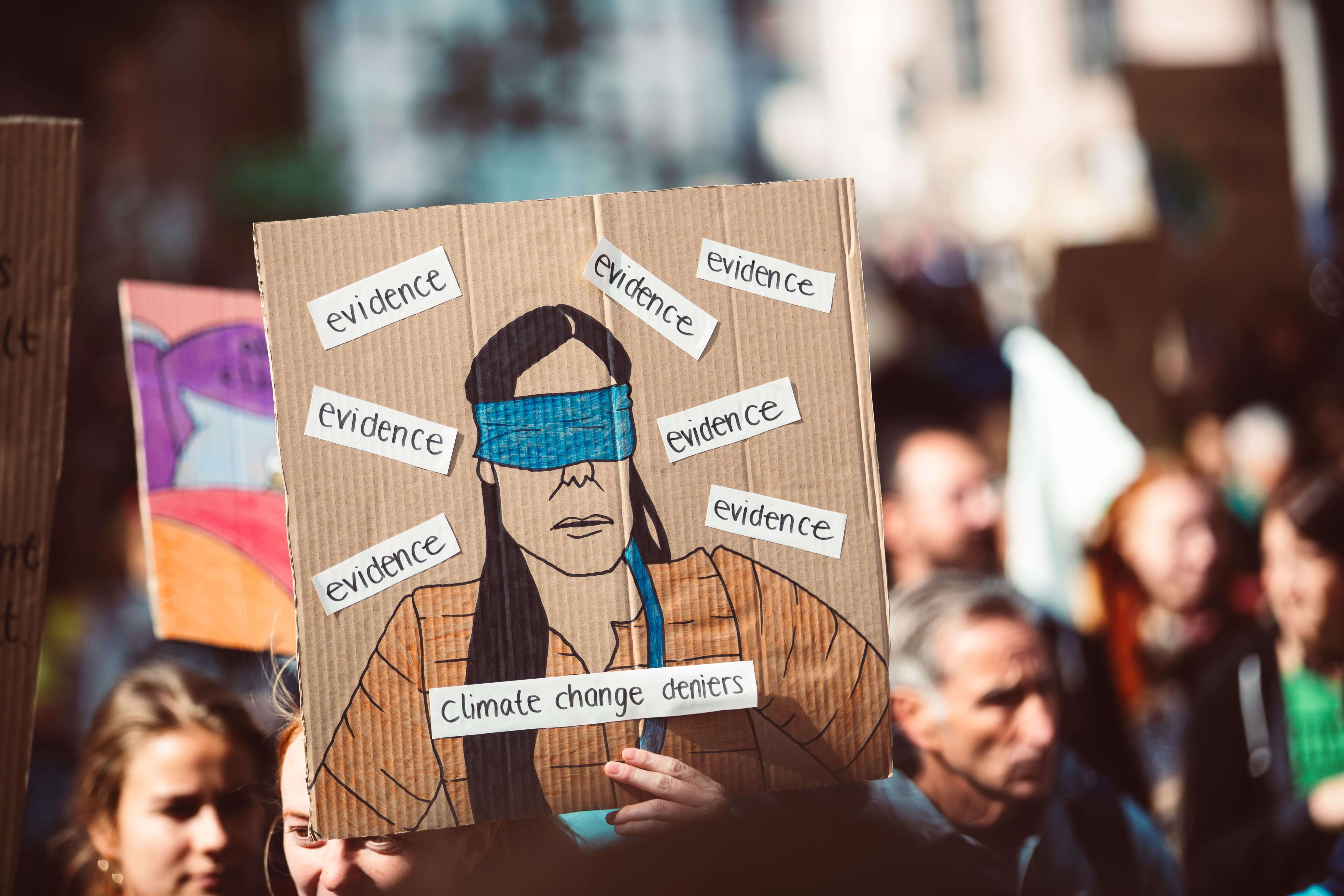
Passion is what starts a fight. Evidence is what sustains it. The activists I've watched produce the most lasting change were almost always the ones who did their homework before they made their case in public. That's not a coincidence, and it's not a small thing.
There's an honest corollary worth stating plainly. Advocacy built on weak evidence, factual errors, or claims that can't withstand scrutiny does more damage to a cause than saying nothing would have, because it hands your opponents the credibility to dismiss your entire argument rather than just the one weak claim. Evidence isn't only a strategic asset. It's a moral one.
It reflects the respect you have for the people you're speaking to, the cause you're fighting for, and the accountability you're trying to build. This article is about why facts are the most powerful tool an activist has.
Key Takeaways
- Evidence-based activism grounds claims in independently verifiable facts, not in assertions that depend on the audience simply trusting the advocate.
- Knowing your facts before going public isn't a step you can skip to save time. It's the foundation of credibility that makes sustained advocacy possible.
- Evidence works differently in each phase of a campaign: it establishes the problem, then sustains accountability, then documents what changed.
- The most persuasive evidence pairs rigorous data with specific human stories, so audiences grasp both the scope and the human stakes.
- Evidence is powerful and insufficient at the same time. It makes a problem undeniable but not urgent, which is why it needs organized pressure behind it.
Know Your Facts Before You Go Public
One of the clearest lessons I've learned is that knowing the facts before going public isn't optional. When we began challenging institutions on disability issues, we led with research rather than moral argument, because research created a specific, documentable claim that couldn't be dismissed as the subjective opinion of an advocacy organization.
That took real preparation. Deep research into the issue before any public advocacy began, independent verification of the key findings rather than reliance on secondary sources, and a methodology rigorous enough to survive scrutiny from both journalists and the institutions whose practices we were challenging.
When we reported, as part of the foundation's mental health work, that police officers and firefighters are more likely to die by suicide than in the line of duty, we could name the numbers. In 2017, at least 103 firefighters and 140 police officers died by suicide, compared with 93 firefighters and 129 officers who died responding to calls.
Because the research was solid, that finding was eventually used in the background material for the bipartisan HERO Act in the Senate. Solid facts travel. Shaky ones get you dismissed.
How Evidence Creates Credibility
Credibility is the single most important long-term asset any advocate has. It isn't built through charisma or conviction. It's built through the consistent alignment between what you claim and what the independently verifiable record shows.
I've watched decision-makers who initially resisted an argument come around to engaging with it seriously once they discovered the evidence behind it was rigorous, specific, and impossible to simply brush aside. Evidence builds credibility in three ways. It demonstrates that you've done the work to understand the issue in depth, which commands respect even from people who disagree with you. It creates a record that can be checked and updated, so your claims are verifiable rather than merely asserted. And it leaves opponents less room to attack you on secondary grounds, because a thorough evidentiary foundation gives them fewer factual openings to exploit.
When our research on disability and law enforcement use of force found that disabled people make up a third to half of those killed by police, the specificity of the finding was exactly what made it land. It reframed how many outlets covered the intersection of disability and policing under the Americans with Disabilities Act.
Evidence in Each Phase of a Campaign
Evidence does different work at different stages of a long campaign. Understanding the phases helps you design a research strategy that serves the campaign as it evolves, rather than treating data as a one-time launch activity.
The Launch Phase: Establishing the Problem
Early on, evidence exists to establish that the problem is real, specific, and significant, not a matter of individual perception or a handful of anecdotes. This is where the rigor and specificity of the research matter most, because your audience isn't yet convinced the problem exists at the scale you claim. Weak evidence here creates a credibility problem that follows the campaign through every later phase. Get this part right or don't launch.
The Middle Phase: Sustaining Accountability
In the middle of a long campaign, after the initial attention fades, regularly updated evidence becomes your most important source of continued attention. Our annual disability representation reports worked exactly this way: each year's update was a natural accountability event that gave journalists a fresh story and gave us a public record of whether institutions' commitments had produced measurable change. An annual number that either moves or doesn't is a story that keeps writing itself.
The Long-Term Phase: Documenting Change
Later, as partial wins accumulate and change starts to show up in the data, evidence takes on a third function: documenting what changed and why, and creating the record that future advocates build on. Campaigns often undervalue this documentation function, which is focused on winning the next battle. Still, the advocates who invest in it leave behind a body of strategic knowledge that outlasts any single fight.
When Opponents Challenge Your Evidence
One of the most important things you can do before going public is challenge your own evidence harder than your opponents will. The credibility you lose when a claim is successfully disputed is far harder to recover than the time it takes to verify that claim thoroughly in the first place.
Our research was designed with this in mind. The methodology was transparent, the data sources were public, and the findings were framed with appropriate specificity about what they did and didn't show. That made it much harder for industry representatives to mount credible methodological objections even when they badly wanted to.
A few practices protect evidence from successful challenge: transparent methodology that others can replicate, conservative framing that claims only what the data directly supports, immediate and specific responses to factual challenges that address the claim rather than the challenger's motives, and ongoing updating that shows a commitment to accuracy over time rather than to a fixed narrative. Claim what you can prove, and no more.
The Limits of Evidence
Evidence is the most powerful tool in activism and, on its own, an insufficient one. Campaigns that treat rigorous research as a substitute for organized pressure consistently underperform relative to the strength of their evidence.
I learned this directly. Our disability representation data was compelling, rigorously sourced, and widely covered, and the industry changed very little, until the evidence was combined with organized public pressure, coalitions with celebrities and civil rights organizations, and direct engagement with decision-makers. It also helped to put a human face on the numbers: a statistic about accessibility failures lands differently once you have heard about D'Arcee Neal, a man with cerebral palsy left to crawl down a plane aisle when an airline failed to bring his wheelchair. Evidence can make a problem undeniable, but it cannot make it urgent.
It can create a specific accountability claim, but it cannot generate the political motivation to respond. It can sustain media attention, but it cannot replace the organized constituent pressure that actually shifts institutional behavior. Facts are the foundation. They are not the whole building.
Evidence and the Moral Responsibility of Activism
The case for evidence isn't only strategic. It's moral. The obligation to know the facts of a cause before making public claims about it is a form of respect for the people that advocacy claims to serve.
Advocacy built on weak or inaccurate evidence doesn't just damage the specific campaign. It damages the trust that makes future advocacy on the same issue possible, because it hands decision-makers and opponents a legitimate reason to be skeptical of later claims, even the accurate ones.
When you make a public claim about an injustice affecting real people, those people's credibility and the public's willingness to take their cause seriously ride on whether your claim holds up. That responsibility is one of the best advocates take seriously, not because strategy demands it, but because respect for the cause and the community demands it.
Final Thoughts
The campaigns that have produced the most durable change were led by advocates who knew their issue more thoroughly than anyone they met in public debate, whose evidence was rigorous enough to withstand challenge, and who understood the difference between making a passionate argument and making a documented claim.
This isn't a counsel of caution that delays action forever in pursuit of perfect preparation. It's a description of the kind of preparation that makes action credible and sustained rather than loud and brief. Do your homework. Then go make your case, knowing it will hold. If you want to go deeper, you can read more about the foundation's mission and my story, explore our white papers and research, find more on effective activism and inclusion, and hear these ideas in practice on the All About Change podcast.
FAQs
What is evidence-based activism?
It's advocacy that grounds its claims in independently verifiable facts rather than in assertions that rely on the audience's trust in the advocate. Instead of arguing only that something is wrong, evidence-based activism documents the problem rigorously enough that the claim can be checked, and connects it to a specific accountability standard.
How do you use facts effectively in advocacy campaigns?
Establish the problem with rigorous research at launch, sustain accountability with regularly updated evidence throughout the campaign, and document what changed at the end. Throughout, pair data with specific human stories, and frame every claim conservatively enough that it holds up under scrutiny.
What is the difference between evidence-based activism and data-driven advocacy?
They overlap heavily. Data-driven advocacy emphasizes using specific research to create an accountability framework and connect it to a concrete ask. Evidence-based activism is the broader commitment to grounding all your claims, quantitative and qualitative, in a verifiable record and to the credibility and moral responsibility that flows from doing so.
How do you respond when opponents challenge your evidence?
Challenge your own evidence harder than they will, before you go public. Keep your methodology transparent and replicable, frame claims conservatively so you're only asserting what the data supports, and respond to specific factual challenges directly rather than attacking the challenger's motives. Verifying thoroughly upfront costs far less than recovering lost credibility later.
Why is credibility so important in long-term advocacy?
Because it's the asset that everything else depends on. An advocate whose claims are shown to be inaccurate loses the ability to be taken seriously, even on the claims that are accurate. Credibility, built through consistent alignment between what you claim and what the record shows, is what lets a campaign sustain the pressure that systemic change requires over the years.
How do personal stories and data work together in evidence-based activism?
Data establishes the scale and pattern of a problem; personal stories make its human stakes concrete and emotionally resonant. Used together, they help an audience understand both that a problem is widespread and that it affects real people. Most strong campaigns lead with a documented finding and anchor it with a specific human experience.
Table of Contents
Explore the latest news from our team.
.jpg)
Data-Driven Advocacy: How Research Strengthens Activist Campaigns
How data-driven advocacy turns research into accountability, giving your campaign the specific, credible evidence base that moral argument alone cannot produce.
.jpg)
How to Choose a Cause Worth Fighting For
The hardest part of activism isn't the work. It's choosing the fight that's actually yours. Here's how to find it.
How Activism Forced Real Change in Hollywood: The Fight for Disability Inclusion
One in four Americans has a disability. Fewer than one in a hundred on screen. Here's how organized advocacy is finally changing that.