
How to Become an Activist: A Step-by-Step Guide to Finding Your Fight
Ready to take action but not sure where to start? This step-by-step guide to becoming an activist covers everything for finding your cause.

I was eleven years old when I made a quiet promise to myself about fairness. I didn't have the language for it yet. I just knew the feeling of watching something wrong unfold, and the heavier feeling of staying silent about it. That promise has shaped the rest of my life, through politics, law school, work in a district attorney's office, and nearly two decades leading the Ruderman Family Foundation. But most of the people I've met in this work started in roughly the same place I did. A specific injustice that felt personal. A willingness to act. No clear idea what to do next.
If that's where you are, this guide is for you. The path from caring to contributing is learnable, and I want to make it concrete. Whether you're figuring out how to become an activist for human rights, how to become an environmental activist, or how to fight for the cause keeping you up at night, the steps are recognizable. They just don't get talked about often enough.
Key Takeaways
- Sustainable activism begins with a cause that's genuinely personal to you, not the one that seems most urgent in the news cycle.
- Deep understanding of an issue, including its history, data, and the lived experience behind it, is what separates effective advocates from loud ones.
- Joining an existing organization is almost always more powerful than starting your own. Infrastructure and trust take years to build.
- The skills you already have are the ones the movement needs. Teachers, lawyers, designers, parents, doctors. Every contribution looks different and every one counts.
- The work is long. Burnout is the most common reason people drop out. Sustaining yourself is part of the practice, not a side concern.
Why Anyone Can Become an Activist
The most persistent myth about activism is that it belongs to a particular kind of person, someone louder than you, freer than you, with more time and more certainty. That myth keeps good people on the sidelines for years.
The truth is the opposite. Movements are built by people with vastly different capacities and entry points. A teacher who organizes her parents' group around accessibility. A retired pharmacist who writes one letter a week to her state legislature. A college sophomore with a clear point of view and a phone. Each of them is a social activist, and each moves the needle in ways a famous spokesperson never could.
The question isn't whether you have enough to contribute. It's what form your contribution should take, given the skills, relationships, time, and energy you actually have.
The Eight Steps to Becoming an Effective Activist
These steps aren't a strict sequence (real life is messier than that), but they describe the path I've watched hundreds of advocates walk across causes from disability inclusion to civil rights to climate.
Step 1: Find Your Cause
The most sustainable activism is rooted in a personal connection, not a sense of obligation to whatever the algorithm is amplifying this week. The causes that last are the ones that feel like yours.
When I think about what made my own work last, it wasn't a strategy memo. It started with a question our family began asking years ago: why weren't children with disabilities part of the Jewish day schools we supported? That question, and the answers that we didn't have, gave me my fight. It connected to something I'd been paying attention to my whole life without quite naming it.
Ask yourself: Which injustices produce a physical reaction in me, not just an intellectual one? Which connects to my own experience, or to someone I love? Can I see myself still showing up for this cause in five years, through the slow periods, not just the loud ones? If yes, you've found something real.
Step 2: Educate Yourself Deeply
Effective advocacy demands that you actually know the issue you're talking about. Not in the influencer sense of having a take, but in the deeper sense of understanding the history, the data, the policy landscape, the counter-arguments, and most importantly, the lived experience of the people most affected.
A few years ago, our foundation commissioned a white paper analyzing how disability is portrayed on scripted television. The finding that traveled was that non-disabled actors played 95% of characters with disabilities. That number changed conversations because it was specific, defensible, and put a measurable shape on something the disability community had been saying for decades. Data didn't replace lived experience. It supported it.
Read widely. Read the people most directly affected first. Read the opposing case carefully. The deeper you understand the issue, the more useful you become.
Step 3: Find Your People and Your Organization
Almost every new activist I meet thinks they need to start something. Almost none of them do. In nearly every cause, there is an existing organization that has spent years, sometimes decades, building the infrastructure, relationships, and credibility your contribution needs.
I've learned this in our own work. When we wanted to advance disability inclusion in Reform Jewish congregations, we didn't build a new entity. We partnered with the Union for Reform Judaism. When we wanted to reach Orthodox communities, we partnered with Chabad. When we wanted to support disabled Israelis, we worked with the JDC and the Israeli government. Each partner had trust in us that we could never have built from scratch.
Find the organizations already in the fight. Ask which ones center the voices of those most affected, and which simply speak on their behalf. Then show up for whatever event, meeting, or volunteer slot is available, and stay long enough to be useful.
Step 4: Use the Skills You Already Have
The most common thing I hear from people who want to be activists is some version of: “I don't know enough yet”, “I'm not the right person”, or “I should wait until I have more to offer”. They're almost always wrong.
Movements need writers, designers, lawyers, accountants, teachers, parents, photographers, coders, nurses. They need professional expertise, and they need people who can show up consistently to a Tuesday night meeting. They need people who can tell a story on Instagram and people who can read a budget.
I think about Ashlyn So, a teenage fashion designer I spoke with on the All About Change podcast. She didn't wait to become a policy expert before confronting anti-Asian hate. She used what she already had: design, a runway, courage. She made it serve the cause. Whatever you already do well is probably something the movement needs. Start there.
Step 5: Start Small and Build
Effective activism almost always starts smaller than the activist initially imagines. This isn't a limitation. It's how durable change is built.
Attend the meeting before you propose the strategy. Volunteer at the event before you try to run one. Write a letter to your city council before you try to influence federal policy. Listen inside a community for six months before you speak for or about it.
Every time I've watched a new advocate burn out fast, it was because they tried to do too much in the first year. Every time I've watched one make a lasting contribution, they started narrow and grew from there.
Step 6: Advocate Where You Already Are
Some of the most consequential advocacy doesn't happen in formal movement settings. It happens inside the workplaces, schools, congregations, and friend groups where you already have credibility and relationships.
I think about Daryl Mitchell, the actor who continued his Hollywood career after a motorcycle accident left him paralyzed. He didn't quit the industry to fight from the outside. He stayed in it and changed the script, literally and figuratively, by insisting that disabled characters be written and played authentically. That's advocacy where you already are, and it's how many of the most durable institutional changes actually happen.
Look at the rooms you're already in. The school board you could run for. The diversity committee at work that nobody wants to chair. The synagogue board that's never seriously talked about accessibility. Those rooms are where your relationships and credibility already give you leverage.
Step 7: Use Your Voice in Public
Public communication is one of the most powerful tools any advocate has, and the barrier to using it is lower than most people assume.
Write to your representative. Letters remain among the most consistently effective forms of constituent pressure. Submit an op-ed to your local paper. Speak at a public hearing. Share a personal story on the platform you already use. Each of these shapes how people understand an issue, and each is available to you today.
One example from our own work: we launched the Ruderman Pledge, asking major studios to commit to auditioning actors with disabilities for every new show. NBC Universal, CBS, Paramount, and Sony all signed. That happened because of years of public pressure (research, op-eds, conversations) that made staying silent more costly than acting. Public voice, applied consistently, moves institutions.
Step 8: Sustain Yourself for the Long Haul
The issues that matter most are the ones that take the longest to resolve. Civil rights. Climate. Inclusion. None get fixed in a news cycle. Burnout is the most common reason good advocates stop being advocates, and it's almost always preventable.
Build a life outside the work. I live in Boston with my wife Shira, our four children, and a dog named Teddy who is unimpressed with all of it. The values I talk about publicly have to be practiced at home. But home is also where I get the perspective and rest that keep the public work honest. Celebrate progress. Take real weekends. Find community inside the movement so you're not carrying it alone.
Common Mistakes New Activists Make and How to Avoid Them

A few patterns I see again and again with people early in this work.
- Trying to do everything at once: New advocates often feel an urgent need to address every dimension of an issue simultaneously. The result is shallow engagement everywhere and impact nowhere. Pick one thing. Go deep.
- Speaking before listening: Arriving in a community with fully formed opinions about what needs to change, before spending time with the people most affected, is the fastest way to damage relationships you'll need for years. Listen first. It isn't a delay; it's the work.
- Confusing activity with impact: Social media posts, petition signatures, and event attendance are not the same as outcomes. Some of the most consequential work is invisible: relationship-building, research, the slow shifting of institutional minds.
- Going it alone: Some people resist joining existing organizations because they want independence or feel the existing groups are imperfect. Both are sometimes true. Neither outweighs the cost of operating without infrastructure, allies, and collective power.
What Effective Activism Actually Looks Like Over Time
The public image of activism (protests, viral speeches, charismatic leaders) captures only a small, atypical slice of the work. The real picture is quieter.
It looks like years of relationship-building with the journalists, legislators, and decision-makers who will eventually be in a position to change something. It looks like a thousand meetings that produce no immediate outcomes but build the shared understanding that enables coordinated action when the moment comes. It looks like explaining the same thing five hundred times until it finally lands.
Most of the people I admire in this work would be hard to spot at a protest. They've been doing the slow work for thirty years, and the changes they've produced are the kind you only notice in retrospect.
Final Thoughts
Becoming an activist is not a single dramatic decision. It's a series of small, consistent choices to engage more deeply with something that matters: to contribute the skills you already have, build the relationships that make the work go further, and stay in it long enough to see what it changes.
The world's biggest social justice advances weren't built by solitary heroes. They were built by communities of people making exactly these kinds of accumulating contributions. The next round of change will be built the same way.
Find your fight, and then act on it. Empathy is the starting point. What you do with it is the rest of the work.
Read more about Ruderman's Mission and Story.
FAQs
Do I need to be an expert to become an activist?
No. You need to be willing to learn. The most effective advocates I know started as ordinary people who got specific about one issue and got smarter about it over time. Expertise is built by doing the work, not a prerequisite for starting.
How do I find organizations working on the cause I care about?
Start by searching for national organizations in your issue area, then look for local chapters or state affiliates. Read their published work, their board makeup, and whose voices they center. Reach out to volunteer or attend an event. Showing up beats applying.
Can I be an activist while working a full-time job?
Yes. Most activists I know have jobs, families, and the same time constraints as everyone else. The question isn't how many hours you give; it's whether they're consistent and well-aimed. A few hours a month, sustained over years, beats a sprint that ends in burnout.
How do I avoid burnout as an activist?
Set realistic limits on the time and emotional energy you give. Keep a life outside the work. Find community inside the movement. Celebrate progress, not just what's still undone. The cause needs you for decades, not weeks.
What is the most effective form of activism?
There isn't one. The most effective form is the one that matches your skills, relationships, and capacity, applied consistently to a clearly defined cause. Some advocates change policy. Some shift culture. Some quietly run the institutions everyone else depends on. All of it counts.
How long does it take to see results from activism?
Longer than you want. Some wins come fast. A policy you helped pass. A story you helped tell. Most don't. The cultural shifts our foundation has helped drive in disability representation have taken decades, and they're still underway. Plan for the long haul. The pace doesn't reflect the value.
Table of Contents
Explore the latest news from our team.
.jpg)
Data-Driven Advocacy: How Research Strengthens Activist Campaigns
How data-driven advocacy turns research into accountability, giving your campaign the specific, credible evidence base that moral argument alone cannot produce.
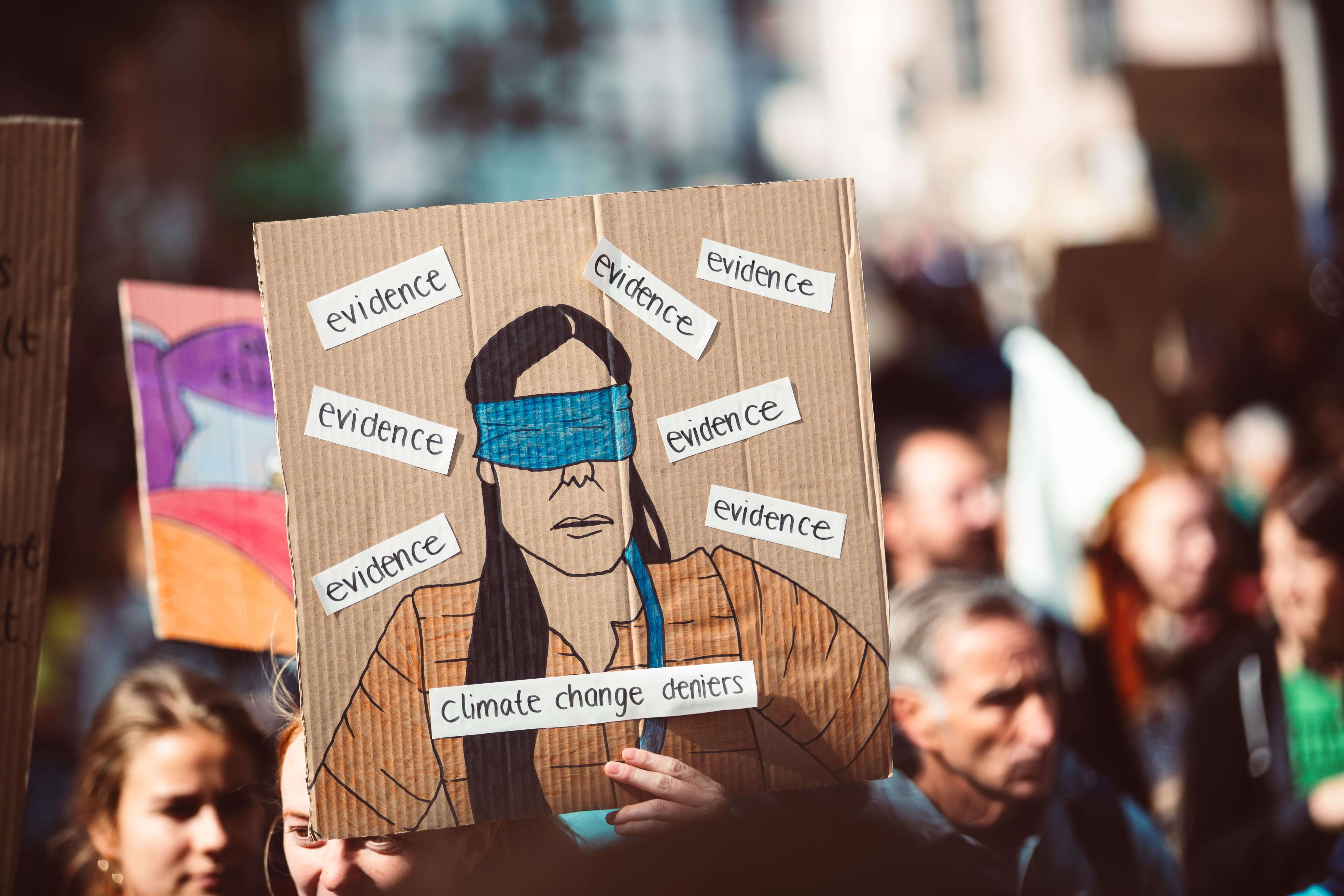
Evidence-Based Activism: Why Facts Are Your Most Powerful Tool
How evidence-based activism builds the credibility and accountability that sustains advocacy through the long work of systemic change. Facts are your most powerful tool.
.jpg)
How to Choose a Cause Worth Fighting For
The hardest part of activism isn't the work. It's choosing the fight that's actually yours. Here's how to find it.