Dr. Benjamin Gilmer – The Tale of Two Gilmers
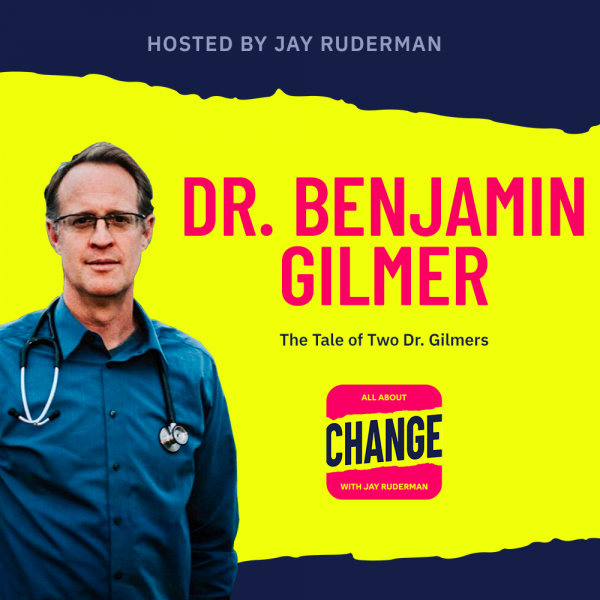
A former neurobiologist turned rural family doctor, Benjamin Gilmer is a family physician, professor, and advocate. Fresh out of medical residency, Dr. Benjamin Gilmer joined a rural clinic only to find that its previous doctor, Dr. Vince Gilmer, murdered his own father. The deeper Benjamin looked into Vince’s case the more he became convinced something was amiss and Vince’s mental and physical health. Benjamin started to research Vince’s cases and even worked with Sara Koenig of “Serial” to get to the bottom of the mystery, which inspired This American Life’s “Dr. Gilmer and Mr. Hyde.” Through the show, they discovered the myriad of conditions that led Vincent toward these terrible circumstances. Moved, touched, and inspired, Benjamin went on to continue fighting for Vincent’s clemency until Dr. Vincent Gilmer’s release. His recent book, The Other Dr. Gilmer, and an upcoming feature film project continue Benjamin’s mission to highlight and transform the atrocity of mass incarceration of people with mental illness.
About:
In this conversation with Jay, he brings attention to the social injustice of mass incarceration, scarcity of mental health care, and global and rural health disparities. To learn more about The Other Dr. Gilmer.
TRANSCRIPTION:
Benjamin Gilmer:
we’re kind of, wed to this notion of punishment, and we’re not wed yet to this notion of like actually healing people.
Jay Ruderman:
Hi, I’m Jay Ruderman and welcome to All About Change, a podcast showcasing individuals who leverage the hardships that have been thrown at them to better other people’s lives.
Mashup:
Jay Ruderman:
And today on our show, Dr. Benjamin Gilmer
Benjamin Gilmer:
unbeknownst to me. I inherited this practice that had been started by another Dr. Gilmer, and then I had started learning all about him because we shared patience.
Jay Ruderman:
Dr Gilmer is a physician, and I guess in a way all doctors are activists, they literally devote their lives to making people feel better. But his true foray into activism began completely by chance. Fresh out of Med school he took on a small rural practice in North Carolina only to find that its previous doctor shared his last name.
Benjamin Gilmer:
I learned that everybody was confused about it, as was I, and learned that my patient still believed in this man..
Jay Ruderman:
Curious to learn more, Dr Benjamin Gilmer started looking into the dark past of his predecessor – Dr. Vince Gilmer. And the deeper he dug the more troubled he became.
Benjamin Gilmer:
Of course, in, in my mind, I’d imagined all these images of who Vince Gilmer might be. But when I saw him, he was, he was none of those things. He, he looked like a decrepit old man who’s, he’s only a few years older than me. he was clearly sick, like he was clearly ill mentally or, and or neurologically.
Jay Ruderman:
Dr Gilmer went on to spend many years fighting for Vincent’s clemency and release.
Benjamin Gilmer:
I had never been to a prison before. I’d never witnessed suffering in in prison. And you know, as someone who grew up as, you know, in a privileged community, like most of us don’t see those things. and and, and for me it was, it was a, a, moment that changed my life.
Jay Ruderman:
Benjamin, thank you so much for joining me on my podcast all about change.
Jay Ruderman:
So, Dr. Gilmer, you were raised by parents who were called to service, both spiritually in the medical profession, mental health. Can you talk about how your parents, perhaps laid the foundation for you and your sense of activism and altruism?
Benjamin Gilmer:
Yeah, I, I have great memories of both. I have two sets of appearance. My stepfather ran a mental health center in the small community where I grew up. And so we were always inundated with, with him being on call and reaching out to people, especially who were suffering from mental illness and seeing his daily ritual of, of like being in, working in service.
Benjamin Gilmer:
Um, that was really informative. Like to my, my path is a, is a, is a child. My father was a, an amazing person who. Who was a little bit of everything. He was a union psychotherapist, an Episcopal priest, but his greatest work was serving in the hospital, so serving people, around the time of their death.
Benjamin Gilmer:
so I got to witness a lot of work that he did as, as someone who really committed himself to service both in, in the church and in the hospital. And, and that was, that was always really powerful for me to see as example,
Jay Ruderman:
And what, Part, do you think spirituality plays in the practice of medicine? Because sometimes, you know, there there’s seen as a separation between spirituality and modern medicine, but do you think there’s a connection.
Benjamin Gilmer:
Absolutely. I mean, this is something my father has spoken to me about is, you know, my whole life, Yeah, the the trilogy of, of mind, body, and spirit
Benjamin Gilmer:
is, you know is universal. you know I have, I’ve witnessed how if you, if you can’t connect with people’s hearts,
Benjamin Gilmer:
then you, you can’t connect with their overall wellness.
Benjamin Gilmer:
And oftentimes as physicians, were afraid to, to delve into the, the,
Benjamin Gilmer:
spiritual of, of a patient. But it’s so important.
Benjamin Gilmer:
and that’s spirituality could be.
Benjamin Gilmer:
You know, it could be Christianity, it could be Buddhism, doesn’t matter, like it’s delving into the spiritual heart of a, of a patient is, is supremely important to understanding how their belief systems are formed and how, how their sense of hope is instilled.
Benjamin Gilmer:
And that’s, that’s so critical to, to fighting illness. My wife is a yogi teacher, and so I’ve, I’ve witnessed her ability to heal through, Yoic practice and, and connecting with, with a deeper sp spirituality. my father always spoke about the collective on consciousness, which is a big part of Carl.
Benjamin Gilmer:
Carl Young’s philosophy.
Jay Ruderman:
Mm-hmm.
Benjamin Gilmer:
And that, that is very important, I think, to understanding the depths of where pathos, you know, comes
Benjamin Gilmer:
from, like from the
Benjamin Gilmer:
collective unconsciousness. And Jung himself believed
Benjamin Gilmer:
that the spirituality was, was part of the centerpiece of, of our collective unconsciousness.
Jay Ruderman:
So true, and I am a big believer in that but you seem to have embodied the fact that medicine is more than just seeing a patient for a few minutes and. And diagnosing them and, and, and moving on, which a lot of modern medicine has, has become, more of like a factory. And, and I think that what you have embodied, was really connecting very deeply with your patients and giving them the time to speak to you and to really understand what they, what they were going through.
Benjamin Gilmer:
What, this isn’t unique to me. This is, this is unique to, to family medicine and community medicine. And public health, and this is what we strive for in family medicine, family med medicine, and, primary care in general is about, is about relationships and about connecting relationships within families and understanding them more deeply and having a, a longitudinal relationship with them.
Benjamin Gilmer:
That’s, that’s, it’s so important to understanding someone’s, struggles. And helping them to heal and build trust with them. So yeah, this is something we take very seriously in family medicine is our, our ability to, to appreciate and really commit ourselves to, not only our, our patients, but to the overall health of our community.
Benjamin Gilmer:
And that’s sort of the essence of, of public health.
Jay Ruderman:
You know, I was intrigued by your practice and, did you make a conscious decision? I, I understand you grew up in the country. Did you make a conscious decision to want to work in medicine, the country serving people, you know, in that part of our commu, uh, our country,
Benjamin Gilmer:
You know, I, I’ll have to admit, no, I would, my plan originally was to do urban emergency medicine, and then I, I discovered what rural medicine was, but even, in practicing medicine in the developing world, which is really powerful, you taught me many powerful lessons along the way, but I. After graduating from residency, I really wanted to, uh, to be a teaching physician.
Benjamin Gilmer:
And the only job available at the time was this rural practice, so I kind of wanted to stay in the city. so it was, it was by, by a random chance that I ended up in that clinic, but it was so fortunate for me because I. Practicing rural medicine and teaching rural medicine and running a rural fellowship has, has been a big thread of my life in, in discovering the joys of rural medicine and discovering that, you know, this is what America needs right now.
Benjamin Gilmer:
But it wasn’t. It wasn’t because I intentionally chose it initially, it, it really sort of fell into my lap as did the crazy intersection of, with Vince Gilmore’s life. But I feel so grateful now that, that it did happen this way.
Jay Ruderman:
So I want to get a little bit into that, you know, which, is obviously.
Jay Ruderman:
You know, started out with a recording of this American Life and then in the book that you’ve written, the other Dr. Gilmer, two Men, a Murder and An Unlikely Fight For Justice. So you are Dr. Gilmer and you are interviewing to take over a practice of Dr.
Jay Ruderman:
Vincent Gilmer. Can you tell us a little bit about the story for those listeners who haven’t heard It and who are yet to read your book? Because it, it, it, it is truly a bizarre story.
Benjamin Gilmer:
It was, it was certainly bizarre for me starting my, my career, sort of following the footsteps of a presumed murderer. But that’s, that’s what, uh, the beginning of, of my, profession. Career was unbeknownst to me. I inherited this practice that had been started by another Dr. Gilmer, and then I had started learning all about him because we shared patience and I learned that he brutally killed his father and was, was to life in prison in Virginia.
Benjamin Gilmer:
And I, I learned that everybody was confused about it, as was I, and learned that my patient still believed in this man. And I, you know, it was a very dissonant time for me starting this career. I. Really just trying to learn how to be a doctor and then being, living in this kind of shadow world where everybody wanted to talk about, about the other Dr. Gilmer because no one made sense of, of the murder.
Benjamin Gilmer:
And so over time I started becoming more and more curious about what happened to him and, you know, started forming my own little theories about what happened. but I, I learned remarkably like. From his patients who wanted to tell his story. And then ultimately I learned that if I was going to continue in that practice that I needed, I needed to know what happened to him.
Benjamin Gilmer:
I needed to dig a little bit deeper and discovered, you know, why this good doctor by everyone’s account, why his brain went, excuse me, went awry, and why he killed his father. So that was, that was the baptism of my career, was trying to figure out this, this crazy mystery.
Jay Ruderman:
And at some point you decided that you were going to visit him in prison. That must have been a very difficult decision.
Benjamin Gilmer:
It was. I mean, I had never been to a prison before. I had never interacted with someone who had committed a violent crime like that.
Benjamin Gilmer:
But I also felt this deep sense of responsibility. Not just as a physician, but as someone who had stepped into his life in a very unusual way.
Benjamin Gilmer:
And so I decided that if I was going to understand what happened, I needed to meet him.
Jay Ruderman:
And what was that first meeting like?
Benjamin Gilmer:
It was surreal.
Benjamin Gilmer:
Of course, in my mind, I had imagined all these images of who Vince Gilmer might be. But when I saw him, he was none of those things.
Benjamin Gilmer:
He looked like a decrepit old man who’s, he’s only a few years older than me.
Benjamin Gilmer:
He was clearly sick, like he was clearly ill mentally or, and or neurologically.
Benjamin Gilmer:
And that was the moment where everything shifted for me.
Jay Ruderman:
Shifted in what way?
Benjamin Gilmer:
I realized that this wasn’t just a story about a crime.
Benjamin Gilmer:
This was a story about illness.
Benjamin Gilmer:
And if that was the case, then the question wasn’t just “What did he do?” but “What happened to him?”
Jay Ruderman:
And that’s a very different question.
Benjamin Gilmer:
Exactly.
Benjamin Gilmer:
And once I started asking that question, everything changed.
Benjamin Gilmer:
I started looking into his medical history, his behavior leading up to the crime, the symptoms that he was exhibiting.
Benjamin Gilmer:
And what I found was that there were clear signs that something was wrong.
Benjamin Gilmer:
But those signs had been missed or ignored.
Jay Ruderman:
And what did that realization lead you to do?
Benjamin Gilmer:
It led me to advocate for him.
Benjamin Gilmer:
Not to excuse what he did, but to understand it in the context of his illness.
Benjamin Gilmer:
And to fight for a system that recognizes the difference between criminality and disease.
Jay Ruderman:
So you took on this mission, not just as a doctor, but as an advocate. What did that journey look like?
Benjamin Gilmer:
It was long and incredibly challenging.
Benjamin Gilmer:
I had to navigate the legal system, the prison system, and the medical system all at the same time.
Benjamin Gilmer:
And what I quickly realized is that these systems don’t always talk to each other.
Benjamin Gilmer:
There’s a disconnect between how we understand illness and how we administer justice.
Jay Ruderman:
And what impact did that have on Vince Gilmer’s case?
Benjamin Gilmer:
It meant that his illness was never properly considered.
Benjamin Gilmer:
He was treated purely as a criminal, without a full understanding of the medical factors that contributed to his actions.
Benjamin Gilmer:
And that’s a problem.
Benjamin Gilmer:
Because if we don’t understand the root cause, we can’t provide the right solution.
Jay Ruderman:
So what does the right solution look like in a case like this?
Benjamin Gilmer:
It looks like treatment.
Benjamin Gilmer:
It looks like compassion.
Benjamin Gilmer:
And it looks like a justice system that is capable of recognizing when someone is sick rather than simply punishing them.
Benjamin Gilmer:
Right now, we’re kind of wed to this notion of punishment, and we’re not wed yet to this notion of actually healing people.
Jay Ruderman:
That’s a very powerful statement.
Benjamin Gilmer:
And I think it’s one that we need to grapple with as a society.
Benjamin Gilmer:
Because there are so many people in our prison system who are suffering from mental illness.
Benjamin Gilmer:
And instead of receiving care, they’re receiving punishment.
Jay Ruderman:
What do you hope people take away from your story and from your work?
Benjamin Gilmer:
I hope they take away a sense of empathy.
Benjamin Gilmer:
I hope they begin to ask deeper questions.
Benjamin Gilmer:
And I hope they start to see the humanity in people, even in those who have committed terrible acts.
Jay Ruderman:
Dr. Gilmer, thank you so much for sharing this incredible story and for the work that you do.
Benjamin Gilmer:
Thank you so much for having me.
Jay Ruderman:
Thank you so much for listening to All About Change. Today’s episode was produced by Tani Levitt and Mijon Zulu. Stay tuned for our next episode. Spread the word, tell a friend or family member, or leave us a review on your favorite podcasting app. We’d really appreciate it. That’s all for now. I’m Jay Ruderman, and we’ll see you soon with another episode of All About Change.