Noa Tishby – On Antisemitism
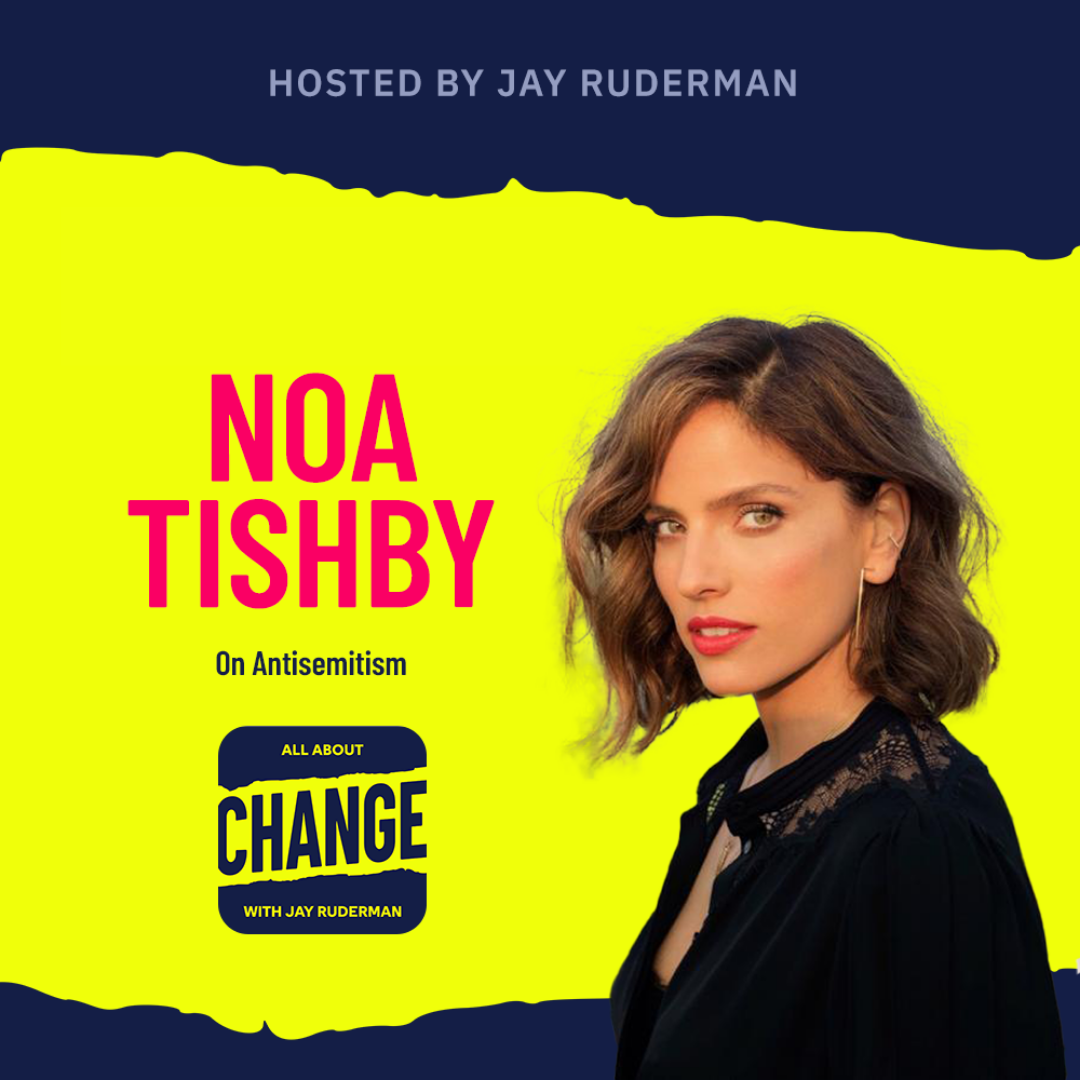
Born in Tel Aviv, Israel, Noa Tishby was born to a Zionist family that was involved in the establishment of Israel. Raised in a secular family in Israel she wasn’t really exposed to Anti-semitism, but that changed as she got older. But when you moved to America she encountered a lot of misinformation about Israel and anti-semitism. Inspired, Tishby decided to take action. She became an advocate and founded the first Israel-focused online advocacy and rapid response organization, Act For Israel, becoming a powerful voice for Israel and the Middle East. After years of advocating for Israel, both publicly and privately. She decided to put her understanding and experience to pen in her first book: Israel: a Simple Guide to the Most Misunderstood Country on Earth
About:
In this conversation with Jay, she talks about how dangerous misinformation and bias produce antisemitism and how both Jewish and non-Jewish people can fight antisemitism. To learn more about <i>Israel: A Simple Guide to the Most Misunderstood Country on Earth.
TRANSCRIPTION:
Noa Tishby:
if you have a subconscious bias against the Jewish people, it’s going to affect your opinion about Israel,
Jay Ruderman:
Jay Ruderman: Hi, I’m Jay Ruderman and welcome to All About Change, a podcast showcasing individuals who leverage the hardships that have been thrown at them to better other people’s lives.
Jay Ruderman:
And today on our show, Noa Tishby.
Noa Tishby:
You grow up in Israel, you grow up with zero antisemitism. Like you just, you’re the majority. Like you’re not, you grow up with zero antisemitism, you learn all about the Holocaust, and you literally kind of like conclude, The humanity must have moved on from this insanity..
Jay Ruderman:
Noa Tishby is an actress, author, producer, and activist. Raised in a secular family in Israel she wasn’t really exposed to Anti-semitism. A chance encounter on a trip to Greece in her teens, offered her a rude awakening.
Noa Tishby:
that was the first time that I experienced holocaust denial and distortion, right? I didn’t know that there’s a term for that.
Jay Ruderman:
Inspired, Tishby decided to take action. She became an advocate and founded the first Israel-focused online advocacy and rapid response organization, Act For Israel, becoming a powerful voice for Israel and the Middle East.
Noa Tishby:
there’s a disproportionate obsession that people have with the state of Israel that is by far exceeding any obsession with any other country that is actually horrific,
Jay Ruderman:
After years of advocating for Israel, both publicly and privately. She decided to put her understanding and experience to pen in her first book – “Israel: a simple Guide to the Most Misunderstood Country on Earth.”
Noa Tishby:
the more open we are, the more inclusive we are, the more like, the more love that’s gonna be out there and the less room for hate there will be.
Jay Ruderman:
Noah Tishbi, thank you so much for being my guest in all about change.
Noa Tishby:
Thank you.
Jay Ruderman:
really looking forward to this discussion. Obviously it hits home for me and my family. Let me ask you first off about yourself. You were raised in a secular family, with a deep history to Israel and in including, family members who are founders of the state of Israel, and you ended up in entertainment. Can you tell us how that happened?
Noa Tishby:
So I talk about this extensively in, in my book. Um, and I apologize if, if some of your listeners have listened to the book already, so I don’t wanna repeat myself. But I grew up in Israel, in Tel Aviv, uh, in a very kind of like secular liberal. Super, super Zionist family, and it was one of those things that was in the backdrop of my life my entire time.But I didn’t actually give it that much attention. Honestly, it was kind of like the water I swam in. My, grandmother was one of the founders of the first kibbutz in Israel, and therefore the first. Kibbutz in the world, Ghana. My, uh, great grandfather moved to Jerusalem in 1922 to start the Indu, the ministry of industry and trade.So he brought into Jerusalem, into the oldies. Sh like a lot of the industry, who’s a huge proponent of. There’s never gonna be a Jewish state without Jewish industry. And my grandfather was Israel’s, not only Israel’s first ambassador to Ghana, Liberia, Nigeria, ivory Coast. He was, he was literally the first ambassador, the first representative that the state of Israel sent to the entire continent of Africa.Um, it was in 1956, um, before Ghana became, uh, Ghana, when it was still Gold Coast So it was one of those things that was just like, that was, these were the stories in the household. This is how I was raised, this is how I was, I, this, I was brought up and I didn’t see it as anything unique at all. And I went into the entertainment industry and did really well.I went in as a, as a child actor, basically in musicals as a teen and. Did really well and was like, to me, this was all about, this was who I am. I I was right. I was like a liberal person of the world, actor and singer and, and all of that. And it wasn’t until I moved to America and started experiencing antisemitism in anti-Israel and Zionist sentiments that I.Yeah, as my mom says, my DNA kicked in and I just couldn’t shut up. I just couldn’t shut up. So I, I knew that this is the most important thing that I can do. fighting against antisemitism, fighting for the Jewish people, and fighting for the state of Israel. Like everything that I’ve done up until now prepared me for this.And two years ago my book came out. It’s called Israel, A Simple Guide To the Most Misunderstood Country On Earth. It’s basically a simple explainer when people don’t know anything about Israel or know a lot about it and wanna kind of refresh themselves. It’s the first book of its kind to make the story of Israel easy to understand,
Jay Ruderman:
Why did you decide to go to LA and, and, and go to Hollywood?
Noa Tishby:
I had an urge to live in America since I was a young kid. Again, I didn’t know at the time why, to me it was I wanted to become a famous actress and singer, and I did well, right? And I did amazing as a producer. But this is not why I need to live in America and not in Israel. The reason I need to live in America and not in Israel is to do the work that I do now.
Jay Ruderman:
you’ve spoken about, that when you were living in Israel, you didn’t think that there was such a thing as antisemitism, that it was gone, that maybe it went out with the Holocaust. then you go to la you talk about some of the instances that you had? In the entertainment industry or just living in Los Angeles, where all of a sudden you said, whoa, this is a real thing out there, antisemitism is alive and well.
Noa Tishby:
You grow up in Israel, you grow up with zero antisemitism. Like you just, you’re the majority. Like you’re not, you grow up with zero antisemitism, you learn all about the Holocaust, and you literally kind of like conclude, The humanity must have moved on from this insanity, this mental illness called antisemitism. Um, The first incident that I. Had was I was 17 years old and I was in a boat on my way to, in Greece on my way from Athens to this island called eos.And I was, there was a, a, a very kind of like cute young guy who started chatting me up and, We were like talking and walking on the deck and midnight and this beautiful Mediterranean August moon, and we started talking and he says to me, he, we say, you know, he’s like, he asked me where am I from? I said, from Israel.I said, where are you from? He said, Germany. And I saw his face change and he kind of became, when he heard I’m from Israel, he kinda went quiet and went a little weird. And I’m trying to lighten things up and I’m like, oh, are you. Being weird about our nation’s past because it was like, you know, we’ve been through so much and we’ve learned so much from it.And like, look at how beautifully we’ve moved on and learned from what had happened to make sure that it doesn’t happen again. And the guy looks me straight in the eye and he goes, well, you know, it’s not a hundred percent certain that it actually happened. There are a lot of books that say that it didn’t, and even if it did, you guys took all the money that we gave you and you used it for your wars,
Jay Ruderman:
Wow.
Noa Tishby:
and that was the first time that I experienced holocaust denial and distortion, right? I didn’t know that there’s a term for that. I was blown away. And remember, I’m 17 years old. I’m like, just finished 11th grade. I have no idea how to respond, respond to this. I just look at him like kind of shocked and I just walked away, extract myself. I went to my girlfriend and I’m like, this is insane.What is he, what, what is that? Again? Not even knowing what this was. Um, so that was the first thing that I’ve experienced and the biggest thing that I’ve experienced. Experience in LA and specifically in Hollywood is anti-Israel or lack of understanding about Israel. So it wasn’t so much about anti-Semitism because honestly there are a lot of Jewish people that work in Hollywood, which is not to say that the Jews control Hollywood. Two very different things. a lot of Jewish people work in Hollywood. True Jewish control of Hollywood. I’m still looking for that. I would love for this to be true, but it, you know,
Jay Ruderman:
not,
Noa Tishby:
Sadly, listen, I would love to, I wish we’d have as much power as they give us. They credit us from so much power. It’s amazing. But the lack of understanding about Israel is the thing that shocked me the most in Hollywood, which actually propelled me eventually to write my book.
Jay Ruderman:
So sort of this benign, like, oh, uh, do you guys ride on camels and, and um, you know, live in tents or was it more like sinister, like, you know, oh, well, aren’t you guys oppressors and a colonial, uh, empire?
Noa Tishby:
of the above. All of the above. All of the above. Like, oh, how come you don’t have an accent? Oh, how come you’re modern and not wearing a headgear? Oh, you guys are so horrible to the blah, blah, blah. And like, you know, every single trope, misunderstanding. every single one when it comes to Israel, every single one.And the thing that shocked me the most, um, was again, the, the reason that I wanted to write this book is because the of the difference between like how little people knew about Israel and the strong opinions that they had about it. So I’m like, well, fun and game. You don’t have to know anything about like, I don’t know anything about the Bali Right.Or Denmark governance system. Right. But I’m not gonna be opinionated about it and tweet about it up a storm and pretend like I know what I’m talking about. And when it comes to Israel, people allow themselves to not know what they’re talking about, but for the sake of virtue signaling, they feel the need to talk about it.
Jay Ruderman:
So how, how did you, like you, you are trying to establish yourself in the industry in Los Angeles and how did you begin to respond to people when they were talking about the country you’re from, but talking in ways that you knew were, were blatantly false.
Noa Tishby:
Couldn’t shut up.
Jay Ruderman:
Yeah.
Noa Tishby:
It’s more than like a political calculation it’s where my family lives, know what I mean? So it’s like, I can’t shut up, I can’t just let it slide. Oh, people have this misconception about Israel and they’re saying these, you know, anti-Zionist tropes and I’m just gonna let it go. I can’t let it go. So I would find myself drawing maps. On napkins at restaurants and getting into, uh, heated arguments with like people who are just like blatant anti-Zionists. and say that they’re not anti-Semitic. And I would just find myself, my Israeli attitude would take over my American attitude and I’d be like, slightly, There was one situation with one specific friend who’s not a friend anymore, and when the book was coming out and I was giving interviews and I said, anti Zionism is anti-Semitism. He texted me and he said, if you’re gonna continue saying that, I’m not gonna be able, you’re not gonna be able to have me in your life anymore.
Noa Tishby:
And I was like, okay. I mean, I don’t know what to tell you. Like, I can’t change what I believe to make you comfortable. And this is not even about belief, it’s about facts.
Jay Ruderman:
That must have been a very difficult moment for you.
Noa Tishby:
It was. But it was also very clarifying. Because you realize who people are and what they stand for. And sometimes that’s painful, but it’s also necessary.
Noa Tishby:
Look, I think that if you have a subconscious bias against Jewish people, it’s going to affect your opinion about Israel. That’s just the reality. And a lot of people don’t even realize that they have that bias.
Jay Ruderman:
So how do you begin to address that? Because it sounds like a very deep-rooted issue.
Noa Tishby:
Education. It always comes down to education. That’s why I wrote my book. Because I realized that people have opinions, very strong opinions, about something they know very little about.
Noa Tishby:
And I’m not saying that everyone needs to become an expert on Israel, but if you’re going to have an opinion, at least make it an informed one.
Noa Tishby:
There’s so much misinformation out there. And social media just amplifies it. People read a headline, they see a tweet, and suddenly they think they understand a very complex situation.
Jay Ruderman:
And do you feel like your work is making a difference?
Noa Tishby:
Yes. I do. I get messages all the time from people who say, “I didn’t know this,” or “This changed my perspective.” And that’s all I can ask for.
Noa Tishby:
I’m not trying to convince everyone to agree with me. I’m trying to give people the tools to understand.
Jay Ruderman:
What do you think is the biggest misconception about Israel that you encounter?
Noa Tishby:
That it’s simple. That it’s a simple conflict with a simple solution. It’s not. It’s incredibly complex.
Noa Tishby:
And when people reduce it to slogans or talking points, they’re doing a disservice to everyone involved.
Jay Ruderman:
And what would you say to someone who wants to learn more but doesn’t know where to start?
Noa Tishby:
Start with curiosity. Be open to learning. Read different perspectives. Ask questions.
Noa Tishby:
And don’t be afraid to change your mind. That’s part of the process.
Jay Ruderman:
So looking back on your journey—from growing up in Israel to becoming an actress, producer, and now an activist—what does “change” mean to you?
Noa Tishby:
Change means using your voice. It means not staying silent when you see something that’s wrong.
Noa Tishby:
For me, it wasn’t a calculated decision. It was something that I felt I had to do. Once I saw what was happening, once I experienced it myself, I couldn’t ignore it.
Noa Tishby:
And I think that’s true for a lot of people. We all have moments where we’re faced with a choice: do we speak up or do we stay quiet? And that choice defines who we are.
Jay Ruderman:
What would you say to people who are afraid to speak up?
Noa Tishby:
I would say that it’s okay to be afraid. But don’t let that fear stop you.
Noa Tishby:
You don’t have to have all the answers. You don’t have to be perfect. But you do have to be willing to stand up for what you believe in.
Jay Ruderman:
And what gives you hope moving forward?
Noa Tishby:
People. The fact that there are so many אנשים out there who care, who want to learn, who want to make a difference.
Noa Tishby:
I believe that the more open we are, the more inclusive we are, the more like, the more love that’s gonna be out there and the less room for hate there will be.
Jay Ruderman:
Noa, thank you so much for sharing your story and your perspective. It’s been an honor having you on the podcast.
Noa Tishby:
Thank you so much for having me.
Jay Ruderman:
Thank you so much for listening to All About Change. Today’s episode was produced by Kim Huang, with story editing by Yochai Maital and Mijon Zulu. To check out more episodes or learn more about the show, you can visit our website allaboutchangepodcast.com. If you like our show, spread the word, tell a friend or family member, or leave us a review on your favorite podcasting app. We would really appreciate it. All About Change is produced by the Ruderman Family Foundation. Special thanks to our production team at Pod People, David Zwick, Grace Pina, Morgane Fouse, Bryan Rivers, and Aimee Machado. That’s all for now. I’m Jay Ruderman, and we’ll see you next time on All About Change.