Olivier Bernier – My Son Deserves to Be Included
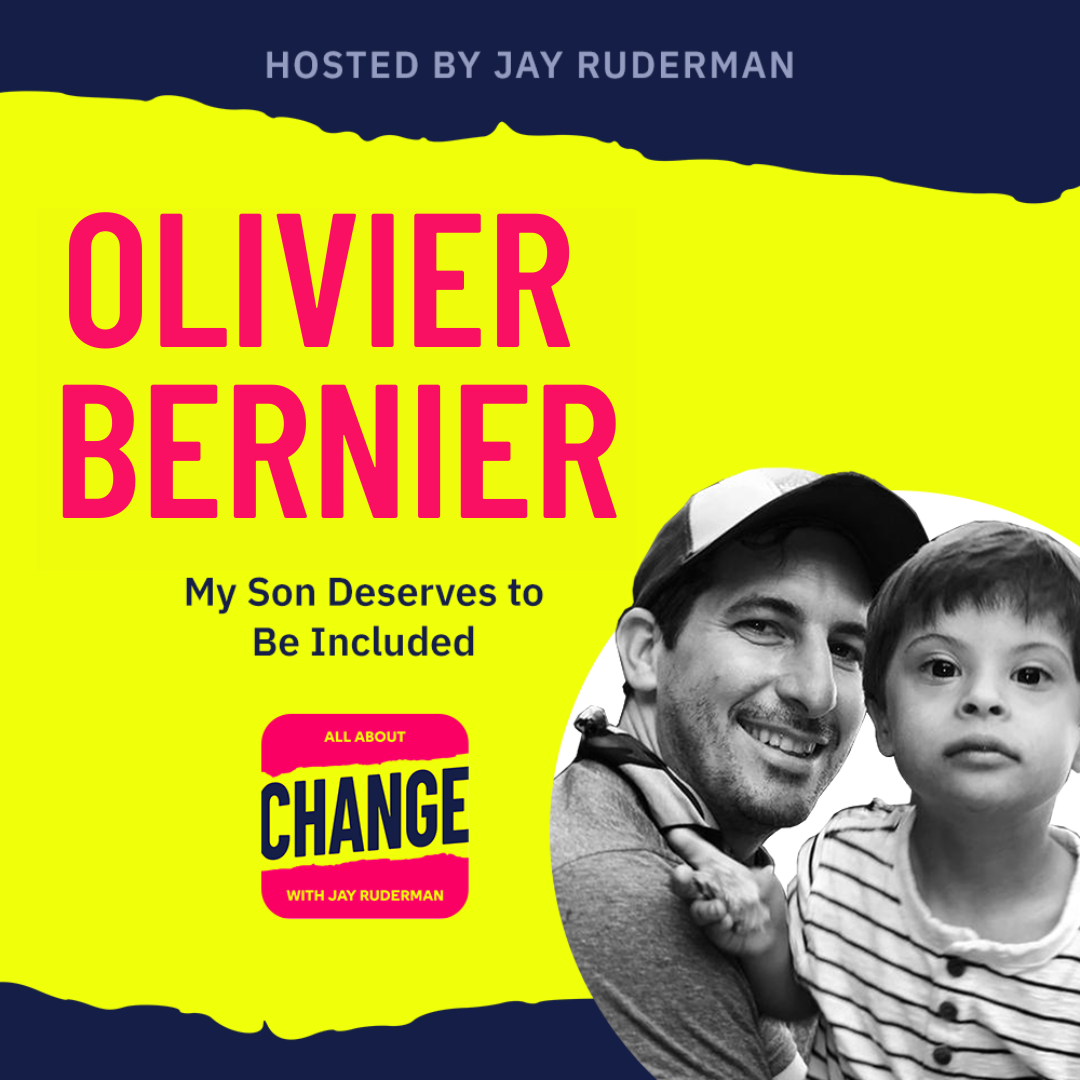
Olivier Bernier is an award-winning director and documentary filmmaker who lives and breathes to tell stories that explore the human condition. When Olivier and his wife Hilda’s son was born with down syndrome they were entirely unprepared. Inspired, Olivier Bernier decided to document his family experience so he applied and won grant money to make a film about inclusive education. However, his family’s experiences with Emilio’s journey took the film in a slightly different direction. <i>Forget Me Not </i>became a documentary film that shares a family’s fight to have their son with Down syndrome included in the country’s most segregated school system in the country, the New York City public school system. Forget Me Not offers a rare look at what a truly inclusive education can look like and how it can lead to a more inclusive society so that everyone has the opportunity to achieve their full potential. The production crew also included several young people with disabilities, as seen in the closing credits of the film.
About:
In this conversation with Jay, he talks about his journey as a father advocating for his child’s inclusive education in one of the most segregated school districts in the US – New York City. To learn more about Forget Me Note.
TRANSCRIPTION:
Olivier Bernier:
If we wanna look at this society we wanna live in, that really has to start in the classroom.
Jay Ruderman:
Hi, I’m Jay Ruderman and welcome to All About Change, a podcast showcasing individuals who leverage the hardships that have been thrown at them to better other people’s lives.
Jay Ruderman:
and Today on our show, Olivier Bernier.
Olivier Bernier:
The problem with most school districts, and especially New York, is that they use these evaluations to find reasons to segregate the children from an early age.
Jay Ruderman:
Olivier Bernier is an award winning director and documentary filmmaker who lives and breathes to tell stories that explore the human condition. When Olivier and his wife Hilda’s son was born with down syndrome they were entirely unprepared.
Olivier Bernier:
I think that if at a very young age you tell someone that you don’t belong, you start disenfranchising them and you don’t give a reason to live.
Jay Ruderman:
But though he was unprepared emotionally, he did have his camera on him, and was filming; From the very moment the doctor broke the news. Inspired, Olivier Bernier decided to document his family experience. Forget Me Not became a documentary about Olivier’s son, Emilio, but it also talks about a much broader issue. The film sheds light on families fighting to have their children included in one of the most segregated school systems in the country – the New York City public school system.
Olivier Bernier:
I think the most important thing is that Emilio’s story just happened to be the one I filmed, but Emilio’s story represents millions of other kids around the country and around the world that are going through the same thing. So you’re not alone.
Jay Ruderman:
Olivia, it’s a pleasure to welcome you as my guest on, all about change. I want to tell you, I really enjoyed your film. Forget Me. Not, it resonated with me on so many different levels. I’ve been involved in the work of inclusive education for most of my career. but I think film has a way of really drawing people in and making them feel and live. what the experience is really like. you start the film in an abandoned institution, and can you talk a little bit about, why you chose to start this film that way?
Olivier Bernier:
Yeah, well, when we started making the film, it was more of a cerebral look at what inclusive education was, and a part of that was just my discovery of inclusive education. As we got into making the film, I started to realize, Well, segregation is actually the norm. And where did it all start? It started in these institutions, so there’s a couple reasons why I think that institutions are really relevant.
Olivier Bernier:
One, because it’s the worst form of segregation, but also it shows to me a sense of optimism because just 50 years ago, if my son was born in a hospital, it would’ve been recommended that he’d go into an institution Today we’re past that and it shows that as a society we can change and we can move forward.
Jay Ruderman:
Right. And, and I think later on in the film you show some of the real horrors that were uncovered when cameras went into these institutions and showed, people with disabilities essentially being treated as animals. and I, and you know, I think we’ve come a long way from them from then, but, we still have a long way to go, which is what your film essentially, points out.
Jay Ruderman:
this is a very personal film. the birth of your son is prominent and, and his. Growing up in his,the trials that you and your wife go through in terms of his education. When you first started to look into or, or had the interest in making this film, did you intend it to be such a personal look into your own life?
Olivier Bernier:
Absolutely not. Uh, when we started the film, we started with the idea that we wanna see what an inclusive education system looks like. when my son was born, I was completely unprepared for him. I didn’t know what Down Syndrome was in a real way. And in some ways I thought that he would be stuck in a room for the rest of his life.
Olivier Bernier:
And part of that was my ignorance, but as I looked at it, You know, I went to a school of 3000 people, a high school, and I never met anyone with Down syndrome or a significant disability. And I started to realize that it wasn’t necessarily only my ignorance as the ignorance of society in general, that we keep people with disabilities hidden.
Olivier Bernier:
And then what we do is we create a river between us. When my son was born being unprepared for him, it really made me wanna look at how can I change that? How can I do something that makes this world a little better for him growing up and as he was turning to education was on our minds, what is education gonna look like?
Olivier Bernier:
And we decided that. Probably want him to be included just because we want him to be included everywhere. at the time we were taking him to swimming lessons to every kid’s group, music group. And why would school be any different?
Jay Ruderman:
So the filming of the birth, was that separate from the film? That was like a personal, like, I’m gonna film my son’s, uh, birth and, and then later was you decided to include that in the film. Is that, does that sound about right?
Olivier Bernier:
Yeah, I was, you know, I was a filmmaker before my son was born, so I was like any dad just filming everything. I just had fancier cameras to do it with. And, when my son was born, it was a pretty dramatic birth for a couple reasons. oxygen levels, all, all the reasons why births are never like they are in the movies and at the time I. Thought I had put my camera down. It was around my neck and I forgot to stop recording. And I caught the moment that, the doctor tells us that Emilio shows five markers of Down syndrome.
Jay Ruderman:
right.
Jay Ruderman:
because the, the scene where the doctor sort of says, you know, there are, indications that your son may have down syndrome. What did you think of the way he delivered that information at, at such a time? I mean, how did that hit you?
Olivier Bernier:
it took a moment that I thought would be one of the best in my life and made it one of the worst I thought. I don’t know that it was necessarily the way he delivered it. It could be, I don’t know if there’s any easy way to deliver it, but the fact that he kind of created some doubt, it wasn’t certain that he had Down Syndrome and he was very apologetic for it.
Olivier Bernier:
I wonder if that was maybe the best way to go about it. knowing what I know now. Down syndrome is not doom and gloom. Down syndrome is just another thing. It’s just another way, just another way of living. and I wish that perhaps I was better informed and that it was more.. presented a little differently. Let’s put it that way.
Jay Ruderman:
Right. So there were no indications during the pregnancy and all of the tests that, someone goes through, um, before the actual birth that you have, that your child may have had Down Syndrome.
Olivier Bernier:
No, there was absolutely no indication that we would have a so with down syndrome and, in fact, the statistically we were at very low risk of it. so it was a complete shock in the moment. I think had we had a little preparation for it, it might have been a little easier of a moment, but it was just the next 24 hours after his birth were very dramatic.
Jay Ruderman:
Right. your wife Hilda features prominently in the film. was that something that from the start, she wanted to be part of this film or was it a discussion between the two of you? How did that come about?
Olivier Bernier:
Yeah, so when we started making the film, like I was saying, it was more of a. Cerebral look at inclusive education. So I was filming with experts and just trying to understand what inclusive education is. Why is it not everywhere and how does it work?
Olivier Bernier:
But as I was making that film, we started to see our own son going down a path of segregation. And at that point I started filming it and I spoke with Ilda and we had a discussion and we both came to the conclusion that if we don’t at least try to capture this, Then what are we doing?
Olivier Bernier:
because I, I think that, as you said earlier, true change happens when people can see and believe. at that moment, we didn’t know what would be in store for Emilio, but we knew that it wasn’t looking good. So that’s why we decided to start filming Emilio so closely. And ultimately that became a large part of the film and we kind of pivoted, from the film we were making to the film you see today.
Olivier Bernier:
I definitely didn’t intend to ever appear in the film, let’s put it that way.
Jay Ruderman:
Had you ever made a film in the past where you were featured,
Olivier Bernier:
No, no, I’m not that kind of director. I much prefer to be behind the camera.
Jay Ruderman:
right.
Olivier Bernier:
you know, I think it happened even in the earlier cuts. I, I was very resistant to it. I thought that I had plenty of opportunity to speak just through the filmmaking and that I didn’t feel like I needed to be visible.
Olivier Bernier:
But then it became apparent. It looked like I was kind of an absent father to Emilio if I didn’t appear in the film. So we started to, the editor started to add more and more of me into the film, and that’s kind of how I ended up in the film.
Jay Ruderman:
Right, and, and your wife is obviously, extremely emotional through the whole process of, you His birth is growing up, his education before he enters into the official New York City school system. did she hold any reservations at any time about having such a prominent role in the film?
Olivier Bernier:
Ilda is a very strong woman, and I think she saw the vision pretty quickly about how important this was because she was a special educator, but she had never been on this side of the table and she had no idea what it was like to be on the other side of the table, so she felt like, It was an important and valuable resource to other parents and other teachers, to show what was happening.
Olivier Bernier:
So I don’t think she had reservations about being on camera, but she did at some point have reservations about inclusive education because being a professional in the field, she believed that we should listen to the other professionals, that they know what they’re doing.
Olivier Bernier:
That’s maybe where there was some resistance on her part. Because the, all the professionals are saying Emilia would do better in a small, segregated class where he’s separated from all the other children. And I just didn’t see it that way. And as soon as she visited the Henderson school, she didn’t see it that way either.
Jay Ruderman:
Right. the Henderson School is in, is in Boston and, part of the film you visit the Henderson school. What makes that school unique amongst other schools in, in the United States?
Olivier Bernier:
So the Henderson school’s a Boston Public School and. The only difference is that 40% of the people that attend this school have a disability and 20% of those people have a significant disability, and they’re all included in the same class.
Olivier Bernier:
There’s not a single segregated special class. When I first read about the school, I was like, oh, well that’s interesting. It seems like a place we should visit. And as soon as you open the doors to this school, it’s your whole world changes.
Olivier Bernier:
You see something that you’re like, this is, this is exactly what school should be like. This is the school I wish I went to, and we spent about two weeks. In the school of filming, and what I learned is that inclusive education is very possible. It just takes the right people to make it happen.
Jay Ruderman:
Right. And, and I think it’s striking that it is part of the, the Boston Public School system. and you juxtapose that to what happens throughout much of the film, of your experience with the New York City public School system, which is set up in a very different way.
Jay Ruderman:
there’s a quote in the film, which is a statistic from a conference at the UN that they said in 1985, the average life expectancy of a person with Down syndrome was 25. And at the time of the film it is 61.
Olivier Bernier:
I, I think there’s multiple things there. There’s definitely, the medical field has advanced and has been able to help people with Down syndrome. especially at birth. There’s a lot of hard defects. There’s a lot of issues that, that we dealt with with our own son, and those have been amazing advances.
Olivier Bernier:
I think what you really have to look at though, is how we value people in society and self-worth and what that does to a person.
Olivier Bernier:
I think that if at a very young age you tell someone that you don’t belong, you start disenfranchising them and you don’t give a person a reason to live.
Olivier Bernier:
how does anybody. Survive in a world where they’re not wanted. You know? And I, I think that’s the biggest leap we’ve taken, is starting to value people with disabilities and showing the world how much they’re worth to us.
Jay Ruderman:
So when you think about the message of the film, what do you hope people take away from it?
Olivier Bernier:
I think the most important takeaway is that inclusion is possible.
Olivier Bernier:
And not only is it possible, it’s beneficial for everyone. Not just for children with disabilities, but for all children.
Olivier Bernier:
When you create an environment where everyone belongs, you create a stronger, more compassionate society.
Jay Ruderman:
And what do you think are the biggest barriers to achieving that kind of inclusion?
Olivier Bernier:
Fear and lack of understanding.
Olivier Bernier:
People are afraid of what they don’t know. And when they don’t understand something, their instinct is often to separate from it rather than embrace it.
Olivier Bernier:
And the system reinforces that. The way schools are structured, the way resources are allocated, it all contributes to segregation.
Jay Ruderman:
So how do we begin to change that?
Olivier Bernier:
It starts with awareness.
Olivier Bernier:
It starts with conversations like this. It starts with people seeing stories like Emilio’s and realizing that these are not “other” children. These are just children.
Olivier Bernier:
And from there, it requires action. It requires parents advocating for their children, educators being willing to try new approaches, and policymakers being willing to rethink the system.
Jay Ruderman:
What role do you think storytelling plays in driving that change?
Olivier Bernier:
Storytelling is everything.
Olivier Bernier:
Data is important, but stories are what move people. Stories are what create empathy.
Olivier Bernier:
And when people feel something, they’re more likely to act.
Jay Ruderman:
Olivier, thank you so much for sharing your story and for creating such a powerful film.
Olivier Bernier:
Thank you so much for having me.
Jay Ruderman:
Thank you so much for listening to All About Change. Today’s episode was produced by Tani Levitt and Mijon Zulu. Stay tuned for our next episode. Spread the word, tell a friend or family member, or leave us a review on your favorite podcasting app. We’d really appreciate it. That’s all for now. I’m Jay Ruderman, and we’ll see you soon with another episode of All About Change.