
Finding Your Fight: How Personal Connection Fuels Powerful Activism
The most effective activists aren't drawn to the most important cause. They're drawn to the one that's personally unavoidable. Here's how to find yours.
I was eleven, in 1977, when I first felt called to make a difference. I was at sleepaway camp, sitting alone on a swing set. I don't know if I was asking God or myself, but I remember the question. Why am I here? And the answer that came back: to do something meaningful for others. To help.
I've spent nearly five decades since then trying to live up to that swing-set answer. What I've learned, mostly the hard way, is that the activists who stay in the fight aren't the ones who pick the most important cause in the abstract. They're the ones who pick the cause they can't walk away from.
They choose the injustice that connects to their own experience, their own community, or their own love for a specific person. Personal connection isn't a bias that compromises advocacy. It's the fuel that sustains it through the years of slow progress and institutional resistance that come with every fight worth fighting.
Key Takeaways
- The most sustained activism is rooted in personal connection: direct experience, community, or love for someone affected.
- Personal connection produces motivation, depth of knowledge, and credibility that abstract commitment cannot replicate.
- Finding your fight isn't about choosing the most important cause. It's about identifying where your contribution will be most meaningful and most sustainable.
- You don't need direct personal experience. Many of the most effective advocates are driven by relationships or witness, not by their own affliction.
- Finding your fight is a starting point, not a destination. It will deepen, expand, or shift as your life does.
Why Personal Connection Produces Better Advocacy
Personal connection isn't only an emotional advantage. It's a practical one.
It produces depth of knowledge. There's a kind of understanding that comes only from living close to an issue, the texture and daily friction of it.
No amount of outside research can fully replicate that. Authenticity follows naturally, which audiences can distinguish from performed concern in about thirty seconds. It builds resilience through the slow years that every cause goes through.
And it produces credibility. When a journalist, a legislator, or a CEO asks why you care, the people with a real answer get further than the people with a polished one.
The Ruderman Family Foundation: A Case Study in Personal Fight
Our foundation's focus on disability inclusion didn't come from a strategic plan. It came from personal experience.
I've lived with periodic depression since my thirties. My father, Mort, developed a disability later in life that severely restricted his mobility. My son was diagnosed with ADHD. None of this is unusual. About one in four Americans has a disability of some kind, which means almost every family in the country has someone whose life is shaped by it. Mine just happens to be mine.
When my father asked me to lead the family foundation, we made disability rights one of our focus areas. I want to be honest about that origin. I didn't search for the most strategically valuable cause. The cause found me through people I love and through my own life. What followed, decades of research, advocacy, and partnerships with the Academy of Motion Picture Arts and Sciences, the major Hollywood studios, the JDC, and the Israeli government, was a strategy built on top of something already personal.
The relentlessness is inseparable from the personal roots. Institutional obligation alone doesn't produce that kind of pressure. Personal investment does.
Different Paths to Finding Your Fight

Personal connection takes different forms. Recognizing the variety helps both those still searching and those trying to understand why others have found theirs.
Direct Personal Experience
The most immediate path is direct experience of the injustice itself. Your own disability. Your own discrimination. Your own immigration status, mental illness, or economic precarity. The injustice you live, you also know. That knowledge is one of the most valuable starting points an activist can have.
Relationship and Love
Many of the most committed advocates I've met don't have direct personal experience. They have a person.
Candace Lightner is the clearest example. In 1980, her thirteen-year-old daughter, Carime, was killed by a drunk driver in California who was out on bail. Candace turned that grief into Mothers Against Drunk Driving.
Within years, MADD chapters had opened across the country, every state had raised its drinking age to twenty-one, and the legal landscape around drunk driving had been transformed. MADD has helped pass more than a thousand laws and cut drunk driving deaths roughly in half. That movement exists because Candace loved a daughter she lost.
Witness and Proximity
Some advocates find their fight through proximity, without a personal relationship to anyone directly affected. The teacher who sees what poverty does to her students. The ER doctor who watches a broken mental health system arrive in the trauma bay. The neighbor watching a family navigate a community that wasn't built for disability.
I spoke with Chrissy Beckles on the All About Change podcast about this kind of awakening. Chrissy is a champion amateur boxer from New York who traveled to Puerto Rico in 2007 and saw abandoned dogs everywhere. Strays with no food, no water, no veterinary care. She told me she sat on the plane home thinking, I don't know what it's going to look like, but I can't get back to New York and forget what I've seen. She founded the Sato Project shortly after.
She and her team have rescued more than eight thousand dogs since, and the stretch of coast she focused on, a beach that used to be called Dead Dog Beach for what people dumped there, is now clear. None of those dogs were Chrissy's. The proximity was enough.
Intellectual and Moral Awakening
Some people find their fight through learning. A book, a documentary, a conversation that makes an injustice visible in a way it wasn't before, and creates an obligation they can't ignore.
Genesis Butler is one of the youngest activists I've interviewed. At age three, when she learned where chicken nuggets came from, she stopped eating meat. By ten she had built an online audience about animal rights and given a TEDx talk. At eleven she founded her own nonprofit, Genesis for Animals. During the COVID pandemic she launched Youth Climate Save, now a global youth-led climate organization with around eighty chapters in twenty-two countries.
What started as a child's moral reaction to information became, by her teenage years, a global youth climate organization with chapters in more than twenty countries.
What to Do When Your Fight Is Not Clear
Many people who want to be activists don't yet know what their fight is. That uncertainty isn't a disqualification. It's a starting point.
Pay attention to which news stories produce a physical reaction. Not the ones you intellectually agree are important, the ones that actually move you. Anger, grief, restlessness. Your body is telling you something your strategy hasn't figured out yet. Notice which conversations feel most urgent and most personal, the topics you can't stop bringing up. That's data. Reflect on the experiences and relationships that have shaped you, and whose story you've been carrying around without quite naming why.
Experiment with a couple of causes for a season; the one you don't want to leave is the one. And sit with the discomfort of not knowing rather than rushing to a cause that feels socially acceptable but isn't genuinely yours.
When Your Fight Evolves
Finding your fight isn't a permanent destination. The cause that matters most to you at thirty may deepen, expand, or shift by fifty.
Deepening is most common. You start engaged with an issue, and your understanding becomes more sophisticated and layered. The advocate who started by raising money for disability inclusion ends up working on media representation, then employment policy, then mental health, because each layer reveals the next.
Expansion is when one cause reveals its connections to others. Disability connects to mental health. Mental health connects to incarceration. None of those threads replace the original; they widen what you're working on.
Transition is when a major life change brings a new cause into focus. The old one doesn't disappear, but a new one rises alongside it.
My own work has gone through all three. I started with disability inclusion, deepened into media representation and employment, expanded into mental health and Israel-American Jewish relations, and now spend a real part of my time on storytelling itself, through the podcast, the book, and our films. The original fight is still mine. It's just become a bigger one.
From Personal Fight to Collective Power
Personal connection is where activism begins. Collective action is where it produces change. The personal fight gives you motivation and knowledge. Joining or building a community of people who share that fight gives you power. Connecting that community to the institutional, policy, and cultural levers that shift systems is where individual passion becomes social transformation.
This transition doesn't require giving up the personal dimension. It requires bringing it into a relationship with others whose personal fights, different in origin, converge on the same systemic injustice. The parent of a disabled child, the disabled adult, the foundation president, and the journalist on the inclusion beat are all in the same fight, even though they entered through different doors. The movement is what happens when those doors lead into the same room.
Final Thoughts
Finding your fight isn't a luxury or a prerequisite. It's the foundation of advocacy that lasts. Personal connection converts good intentions into sustained engagement, engagement into knowledge, and knowledge into the kind of credible, resilient advocacy that actually changes systems.
The injustices most worth fighting are the ones that have persisted longest. They have persisted not because no one cared, but because the caring wasn't organized, sustained, and strategic enough to overcome the resistance arrayed against change. Your fight, if you find it, is part of the answer to that. Find it. Then act on it.
Read more about my story and what drives the work, or explore more on activism and inclusion on the blog. The full version of how I found my fight is in Find Your Fight.
FAQs
How do I find a cause I am passionate about?
Pay attention to your physical reactions, not your intellectual ones. The stories that genuinely move you, that connect to your own life or someone you love, are pointing you somewhere. Experiment with several causes for a season and see which one you can't walk away from.
Do I need personal experience with an issue to advocate for it?
No. Some of the most effective advocates I know are driven by relationships, by witnessing an injustice up close, or by an intellectual awakening that became a moral one. What matters is whether the connection is real enough to sustain you.
What if I care about many causes and cannot choose one?
Caring broadly is a strength. Acting on everything simultaneously is a weakness. Pick one to go deep on for a season, give it your real time and energy, and stay open to the connections that emerge.
How do I know when I have found my fight?
You stop being able to leave it alone. The cause shows up in your conversations and your weekends. You're willing to do the unglamorous work, not just the visible parts. And the slow periods make you want to dig in, not quit.
Can my fight change over time?
Yes, and almost everyone’s does. Sometimes it deepens, sometimes it expands into adjacent causes, sometimes a life change brings a new fight alongside the original. Stay engaged, stay learning, and stay honest about where your real energy is going.
Table of Contents
Explore the latest news from our team.
.jpg)
Data-Driven Advocacy: How Research Strengthens Activist Campaigns
How data-driven advocacy turns research into accountability, giving your campaign the specific, credible evidence base that moral argument alone cannot produce.
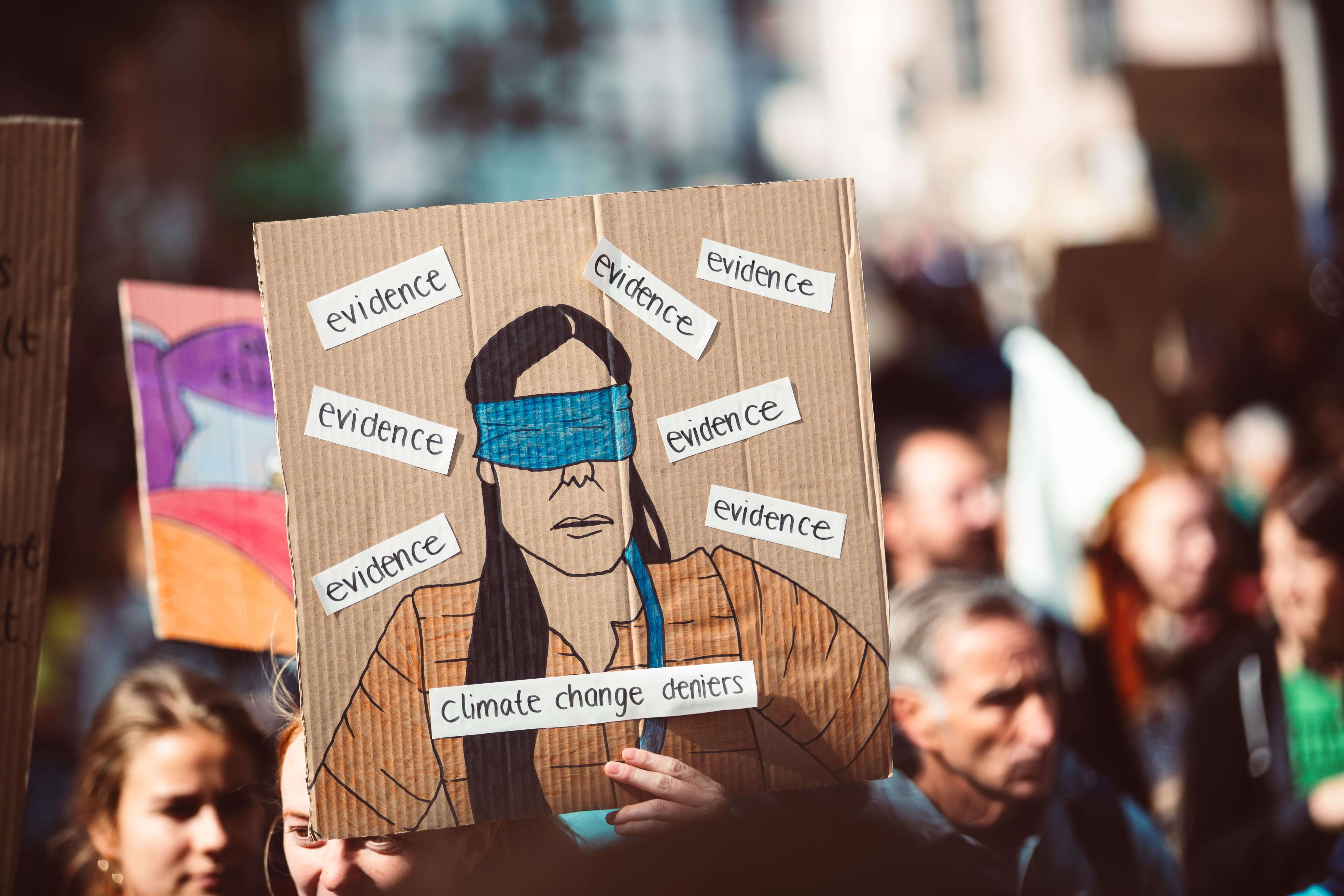
Evidence-Based Activism: Why Facts Are Your Most Powerful Tool
How evidence-based activism builds the credibility and accountability that sustains advocacy through the long work of systemic change. Facts are your most powerful tool.
.jpg)
How to Choose a Cause Worth Fighting For
The hardest part of activism isn't the work. It's choosing the fight that's actually yours. Here's how to find it.